UAE-Backed Solar Project Enhances Rural Healthcare Access in India
A UAE-supported solar initiative in rural India has improved maternal health services and reduced travel distances for over 5,000 women.
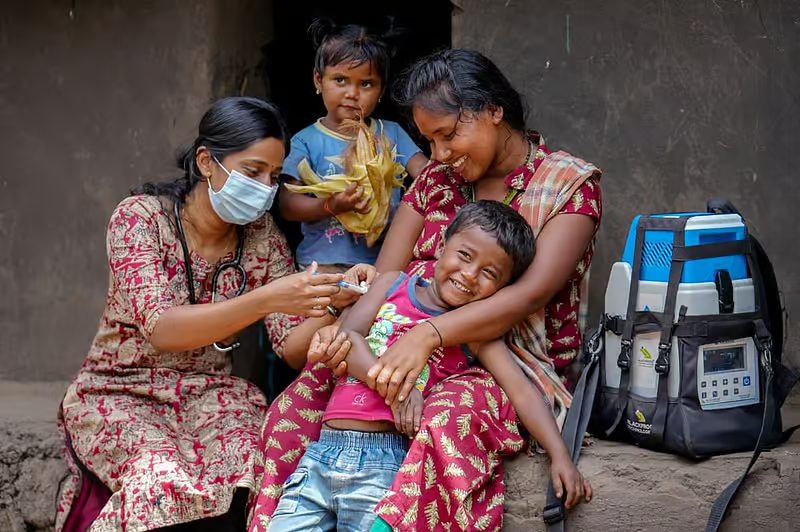
More than 5,000 women in rural India have benefited from antenatal screenings conducted closer to their homes through a healthcare program supported by the UAE. The initiative has helped patients avoid traveling approximately 55 to 60 kilometers for each health check.
This effort is part of Beyond2020, the UAE's Zayed Sustainability Prize flagship program, implemented in India by the SELCO Foundation, a 2018 prize recipient. Dr Harish Hande, CEO of SELCO Foundation, noted that the program has expanded diagnostic, maternal, neonatal, and emergency services at rural health centers.
The use of solar-powered AnandiMaa maternal and child health kits enables screenings to be completed within 15 to 20 minutes at the community level, allowing health workers to detect conditions needing early referral. For example, abnormal fetal heart-rate patterns were identified and reviewed in real time by gynecologists. The program also facilitated non-stress testing for mothers in their third trimester attending antenatal care.
In addition, an AI-assisted cardiac screening component detected multiple cardiac murmurs, potentially preventing thousands of referral trips, with travel distances of around 57 kilometers avoided per patient. Some facilities reported a 100% increase in daily outpatient visits and about a 50% rise in monthly vaccinations following the introduction of reliable power and new equipment.
Reliable electricity also ensured vaccines were preserved during power outages and kept essential equipment and lighting operational during nighttime deliveries and emergencies.
Dr Hande emphasized that technology alone does not create healthcare services. He explained, “A digital microscope, for instance, can capture and transmit images, but this only becomes telepathology if there is also a pathologist, connectivity and an established referral/consultation pathway.”
The program has adopted a comprehensive care-pathway approach, integrating energy systems, medical devices, infrastructure, staff workflows, training, connectivity, maintenance, and referral mechanisms. At Aradeshahalli, solar power supports point-of-care diagnostics, an AI stethoscope, maternal health kits, a baby warmer, suction equipment, and digital labor-monitoring technology.
Systems are in place to maintain facility operations post-installation. Solar systems are remotely monitored, with faults generating service tickets tracked via service-level agreements. Preventive maintenance, vendor support, and staff training are embedded in the model. Health facilities have reallocated funds previously used for diesel and electricity to maintain the solar installations.
Dr Hande suggested the model could be adapted for other countries facing similar challenges in healthcare access and energy reliability, highlighting Africa's potential due to its remote communities and inconsistent electricity supply.
He clarified that the model focuses on methodology rather than replicating specific technologies, stating, “The transferable element is the methodology; start with the health needs of the facility and its community, understand the services and equipment required, design the energy system around those needs, integrate the built environment and technology, and build the institutional and O&M systems required to sustain it.”
The India project is one of 19 Beyond2020 initiatives across sectors including energy, health, water, and food, reaching over 429,800 people in 19 countries. Colombia has been selected for the 20th deployment.